Director of Community Impact
There is a moment that happens in every office at POWER when someone looks around the room during a workshop and realizes this is not just another company meeting. It is the moment when people recognize that they are being asked to see themselves not only as employees, but as neighbors, advocates, and partners in the place they call home. That moment sits at the heart of our employee-directed giving work at Power Home Remodeling.
Power for Good, our philanthropic initiative, began with a simple belief. When you meet people where they are and give them the chance to bring their own lived experiences into the conversation, you unlock something important. You help people see that they already carry the instincts of a philanthropist, even if they do not use that word to describe themselves. Over time, this belief shaped a set of programs that allows individuals across the company to direct resources in ways that reflect their values.
We had individual activations and company-wide initiatives that reached employees across the country. Yet something was missing. As a company with over twenty locations across the US, we wanted to help people come together inside their own geography and think collectively about the needs they saw around them every day. We wanted to create a shared experience that gave each office the chance to co-create a local vision for impact.
This became the starting point for our partnership with Philanthropy Together.
Launching a Collective Giving Approach
To do this well, we knew we needed a model that created space for education, shared learning, honest dialogue, and group decision making. We also knew we needed a partner who understood how to activate everyday givers and turn their lived experiences into community leadership.
Philanthropy Together became that partner. Their mission to help people everywhere become more engaged and strategic givers aligned naturally with our desire to democratize philanthropy inside a corporate setting.
Before we designed our program, we joined Philanthropy Together’s LaunchPad training. LaunchPad is a hands-on learning experience that takes people through the history, mechanics, and values of giving circles. It introduces the idea that people do not need to be wealthy or credentialed to participate in the decisions that shape their communities. They only need curiosity, care, and a group of peers who share that commitment.
Sitting inside LaunchPad showed us an approach that helped people move as a collective. It helped us see the importance of conversation and co-creation and allowed us to imagine what this could look like inside a company of our size (around 4,000 at the time). From there, the relationship continued to grow. Together, we co-designed a model that would work across every one of our offices. We worked through the steps, expectations, and guardrails. We talked through what would be necessary for employees to feel ownership. We built a structure that felt firmly rooted in our belief that philanthropy is strongest when it is people powered.
As a result, we launched 21 giving circles across the country and distributed $3.2 million in funding to local nonprofit organizations chosen by our employees. That scale reflects the strength of the model and the commitment our people brought to every step of the process.
Design Principles that Shaped the Program
When you try to bring a giving circle approach into a corporate environment, you have to be thoughtful about what you keep from the traditional model and what you adapt. We wanted to introduce structure without limiting creativity. We wanted employees to feel supported without feeling guided. The design principles below helped us strike that balance.
Local Ownership Beyond Local Leadership
Power has always believed that people closest to the work should help shape the work. We carried this belief into our program by dismantling the traditional top-down approach that can come with corporate philanthropy. Instead of asking executives or managers to decide where funding would go, we invited employees across every level of the office to act as equal participants. The goal was simple. When everyone in the market has a voice in the decision, ownership becomes shared, and commitment becomes deeper.
No Expertise Needed
Many people do not step into philanthropy because they assume they need knowledge or technical experience before they can contribute. We wanted to remove that barrier. Joining a giving circle required no pre-work and no specialized background. Employees only needed to bring their lived experiences, their understanding of their community, and their willingness to learn alongside their colleagues.
Multiple Points of Entry
People’s schedules, responsibilities, and availability vary widely. If we limited participation to a single moment or workshop, we would risk excluding people who wanted to contribute. Instead, we created multiple moments when employees could engage. They could join the workshop, nominate organizations, help review applications, vote on finalists, or participate in engagement opportunities throughout the year. Every step became an invitation.
Ambassador Network
Each office has a Community Impact Ambassador who acts as a liaison between the local team and their chosen nonprofit partner. Ambassadors help facilitate workshops, keep communication flowing, and work with organizations to create a cadence of opportunities. Their role ensures that engagement does not stop once the funding decision is made.
Avoid Parachuting
In her book The Big We, Hali Lee describes the pitfalls of parachuting into communities with predetermined ideas of what is needed. She reminds us that people who live and breathe in those communities hold knowledge that outsiders simply cannot replicate. Her words became a guiding caution for us. We wanted to avoid parachuting into communities with assumptions. We wanted to rely on the people who drive those streets and know those neighborhoods to guide the decisions that matter.
Set Guardrails Without Imposing Pillars
We put thoughtful criteria in place around potential grantee size, capacity, and budget. At the same time, we avoided dictating the specific issues employees must focus on. Whether people felt passionate about education, youth development, housing, mental health, or environmental concerns, the choice belonged to them. The guardrails ensured responsible grantmaking. The open issue areas ensured authenticity.
The Approach Behind the Program
Designing a giving circle model across multiple markets requires thoughtful sequencing and operational discipline. We created a structure that allowed new offices to grow into their communities before taking on decision making and gave established offices a clear path for participation.
Timing for New and Existing Offices
POWER opens in each new geography with existing employees who relocate before we begin hiring locally. Because of this, our policy is that any office must be open for at least one year before launching a giving circle. This gives staff time to learn the city, understand the neighborhoods, and build their own sense of place before stewarding local resources. Waiting for a full calendar year also enables our locally-hired employees to contribute to the process along side transplant employees.
Information Calls
Giving circles were unfamiliar to many employees, and this program represented a major shift from our traditional programming. We hosted information calls to lay the foundation. These calls helped people learn what to expect, understand the purpose, and get excited about the opportunity to participate.
Workshops
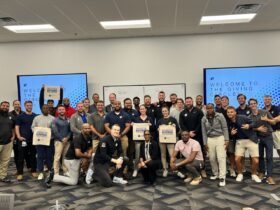
Each office participated in a two hour in-person workshop built around three goals. First, we wanted to establish a sense of openness and psychological safety so that people felt comfortable sharing their perspectives. Second, we created space for the office to name three core values that would guide their partnership. Finally, we facilitated a discussion that led to the selection of a focus area that felt most urgent and meaningful for their community.
Nomination Phase
Once the office selected its focus, every employee had the opportunity to nominate nonprofit organizations that aligned with the values and issue area. Our Community Impact team reviewed these nominations and extended invitations for organizations to apply for funding.
Decision Making
After reviewing all applications, we presented finalists back to the office. Employees had the opportunity to review, discuss, and select the organization that best aligned with their interests and hopes for the year. This decision process was the moment when collective intention turned into action.
Engagement Throughout the Year
Selecting a partner is not the end of the work. It is the beginning. Each Community Impact Ambassador works directly with the grantee partner to design volunteer opportunities, learning experiences, and engagement moments that allow employees to stay connected to the work throughout the year.
Gratitude Grants
Every nonprofit that applied, but was not selected, received a gratitude grant of $2,500. This allowed us to honor the time, energy, and knowledge they invested in the process. It also reinforced our belief that the ecosystem surrounding each giving circle matters as much as the final decision.
Results that Emerged Across the Company
At the close of each workshop, we asked employees to complete a short handwritten reflection of the experience: key takeaways, the most surprising thing they learned, the emotions attached to the experience. Including reflections not only helped us collect qualitative feedback on the workshops, but kept track of our participation throughout the rollout of the program. We’re proud to say that 15% of the company participated in selecting the values and focuses across all our giving circles.
Once it came time to review the reflections, we saw patterns emerge. The experience of collective decision making created something deeper than philanthropy. It rewired the way people saw themselves, their colleagues, and their communities. See below for the top three themes from the experience.
Employees Felt Proud to Work for a Company that Trusted Them
The grant size in each market ranged between $100,000-$300,000. When employees realized they were trusted with this responsibility, something shifted. They felt proud to work for a company that did more than talk about listening. They felt proud to work for a place that put real resources behind their values and allowed them to shape the outcome.
Circles Helped People Connect Across Departments and Roles
Giving circles sparked conversations that do not happen in normal work settings. People shared stories about the neighborhoods where they grew up, the experiences that shaped them, and the issues that mattered most to their families. Silos faded. Relationships deepened. People became teammates in a new way.
Employees Saw Their Communities Differently
When you study the needs of your own city, listen to the voices of local organizations, and visit neighborhoods you may not have seen before, perspective changes. Employees walked away with a clearer understanding of challenges facing their communities and a stronger desire to take part in their solutions.
Looking Ahead to 2026 and Beyond
The most important lesson from this work is simple. When you give employees ownership over giving, you do more than fund good work in the community. You build culture inside your company. You build trust. You build purpose. You help people feel connected to something larger than their job.
Looking ahead to 2026, we plan to expand this work into more offices. We are adjusting grant sizes to better reflect local needs and moving toward multi-year partnerships that will deepen the impact and create longer lasting relationships between our employees and their nonprofit partners.
If you are interested in learning more about collective giving or want to explore how this might work in your company, I encourage you to visit https://philanthropytogether.org/ and whatisagivingcircle.org. You can also reach out to connect with me via email (james.myers@powerhrg.com).
The future of corporate philanthropy lives in models that elevate people, honor community wisdom, and allow collective action to shape the path forward.