Andrea Wood
President & CEO, ACCP
Something has shifted in how corporate social impact leaders are being asked to show up in their organizations. Budget pressure is real, and so is the scrutiny. It’s coming from every direction at once – from the C-suite, from investors, from employees, and from the communities companies serve. ACCP members are managing an extraordinary number of stakeholders simultaneously, and doing it while being asked to demonstrate, in concrete business terms, why this work matters.
ACCP’s 2026 Predictions Survey found that the top anticipated trend among our members this year is aligning corporate social impact strategy with overall business strategy. The leaders who built that foundation before the scrutiny arrived are navigating this moment with greater confidence. The ones who are struggling are often disadvantaged by a lack of communication infrastructure to cement the value their programs deliver.
The Evidence is Clear
This year’s data indicate that our field is holding steadier than headlines might suggest. Nearly two-thirds of ACCP members expect their budgets to remain stable in 2026, and we’re moving forward this year on top of a long-established and well documented business case for this work:
- 88% of leaders say purpose-led strategies enhance long-term value creation (Benevity, 2025)
- More than 70% of employees say community impact influences their employment decisions (ACCP Making the Case 2026)
The proof is there for anyone who wants to see it. The challenge remains that most CSR leaders need to communicate this information more consistently, and to the right internal decision-makers.
Best Practices from Leaders Getting It Right
Among the companies navigating this environment with the most confidence, here are a few practices and habits they’re using:
- Build the case proactively before asked. Strong strategic pillars, clearly aligned with the business, are put in place long before the scrutiny arrives.
- Speak the language of your audience. The case made to a CFO looks different from the case made to a board or a CEO. It’s crucial to speak in terms that matter to each.
- As a team, treat making the case as an ongoing discipline. This cannot be a one-time exercise at budget season, but an ongoing dialogue of business value assessment and delivery.
Putting these into regular practice will help tamp down the pressure or anxiety that surrounds a budget conversation, proposal or program request or the offhand question from a senior leader. It aligns leadership to have a shared vision for the value and function of corporate purpose.
What 2026 Is Asking of CSR Leaders
I have been in this field long enough to know how the pendulum of corporate support can swing. Companies invest, then cut, then invest again. The greatest tool to face these changes still remains a clear and strategic business case for your work that is adequately socialised and deployed.
This is at the heart of what 2026 is asking of us. Stop waiting to be asked to prove the value of your work. Build that case proactively, in the language of the business you serve, and be able to articulate it clearly, in any room, to any audience.
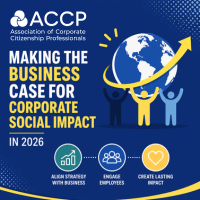
ACCP’s Making the Case for Corporate Social Impact toolkit is a resource built to help CSR leaders do exactly that. The full toolkit is available now at accp.org.